Mechanical Engineer · Defense R&D

Engineering hardware for extreme environments.

I design, analyze, and fabricate high-energy mechanical systems from initial concept through finished hardware and test.

01
Mechanical designCreo · GD&T · release
02
Engineering analysisANSYS · first principles
03
Hardware executionPrototype · build · test

Design rigor.
Real hardware instincts.

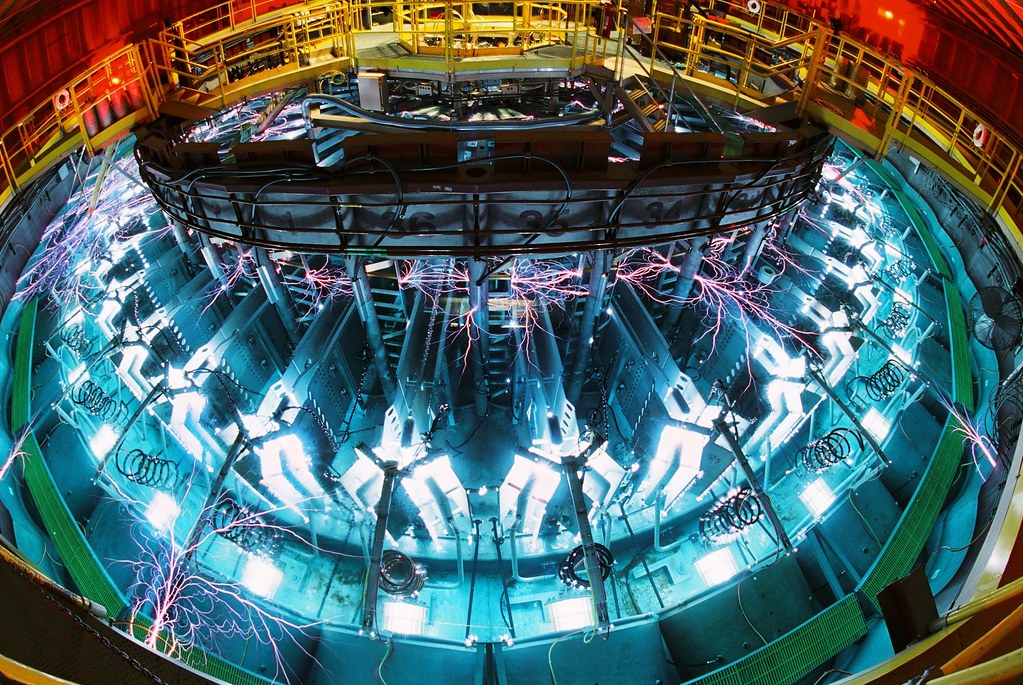
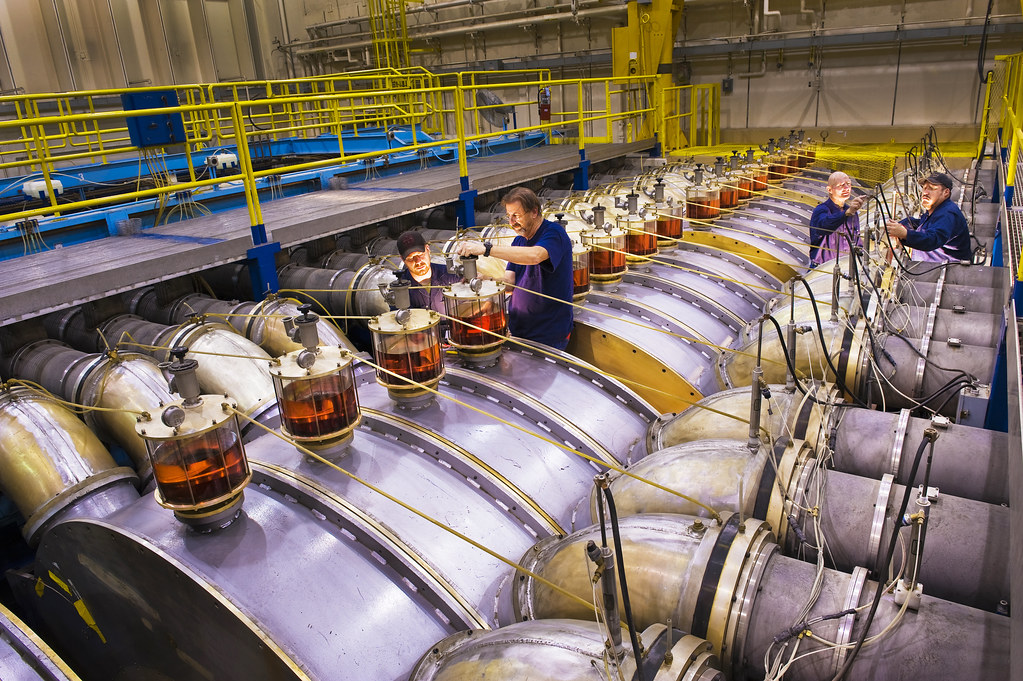
Atmospheric image: Saturn accelerator · Sandia National Laboratories · Randy Montoya

01 / SELECTED WORK

Hardware-centered engineering.

Public, non-sensitive summaries of design, analysis, manufacturing, and research work.

Saturn pulsed-power accelerator firing during a milestone shot at Sandia National Laboratories
Photo: Saturn firing · Sandia National Laboratories · Randy Montoya

02Structural analysis

Accelerator hardware validation

Structural FEA for static strength, pressure and vacuum loading, deformation, factor of safety, and eigenvalue buckling—used to inform design decisions before hardware deployment.

ANSYSFirst principlesDesign validation

Facility photographs are publicly released Sandia imagery. Remaining project visuals are original abstract graphics and do not depict controlled or proprietary hardware.

02 / FORMULA SAE

Aerodynamics, built as a system.

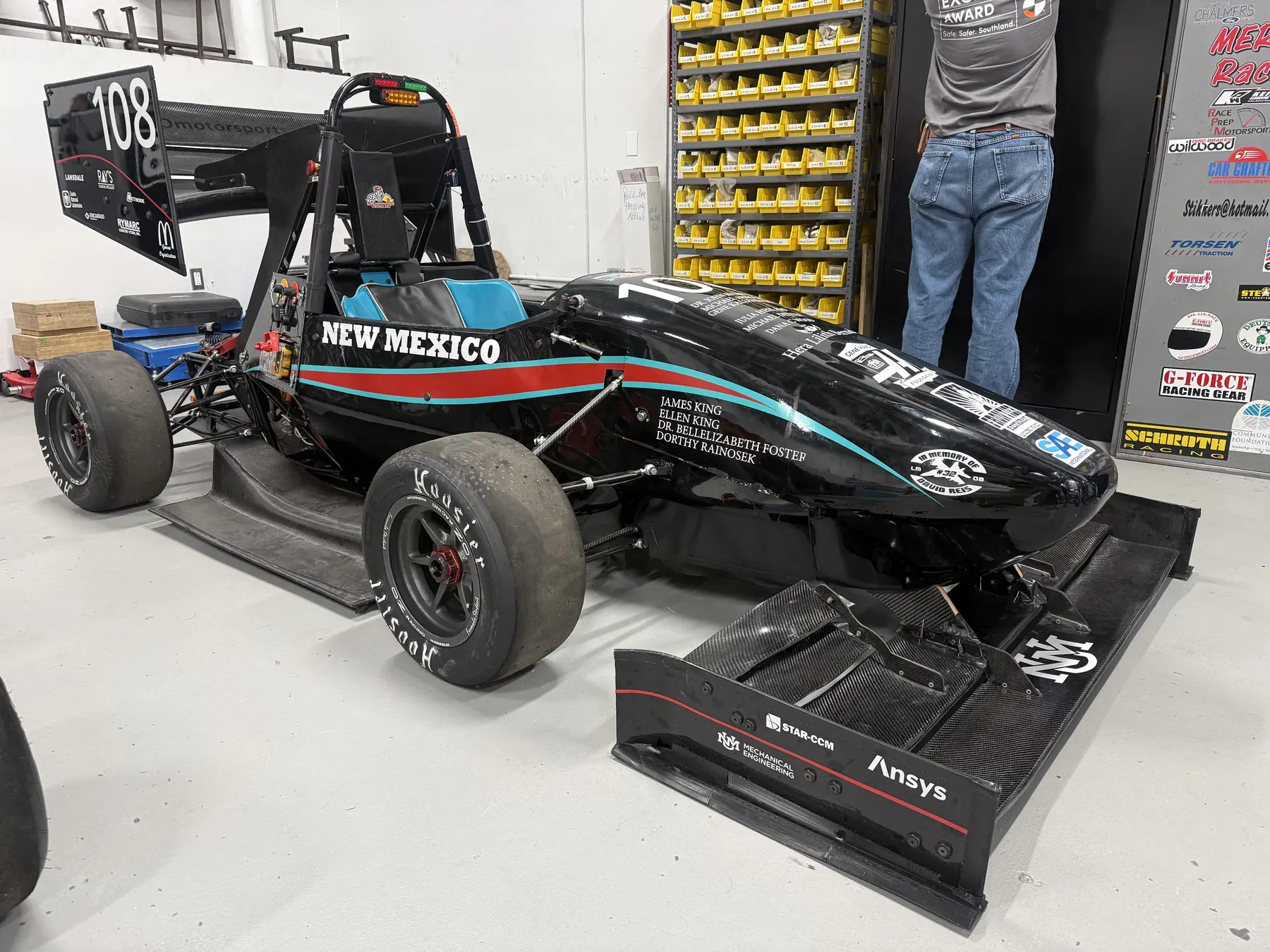
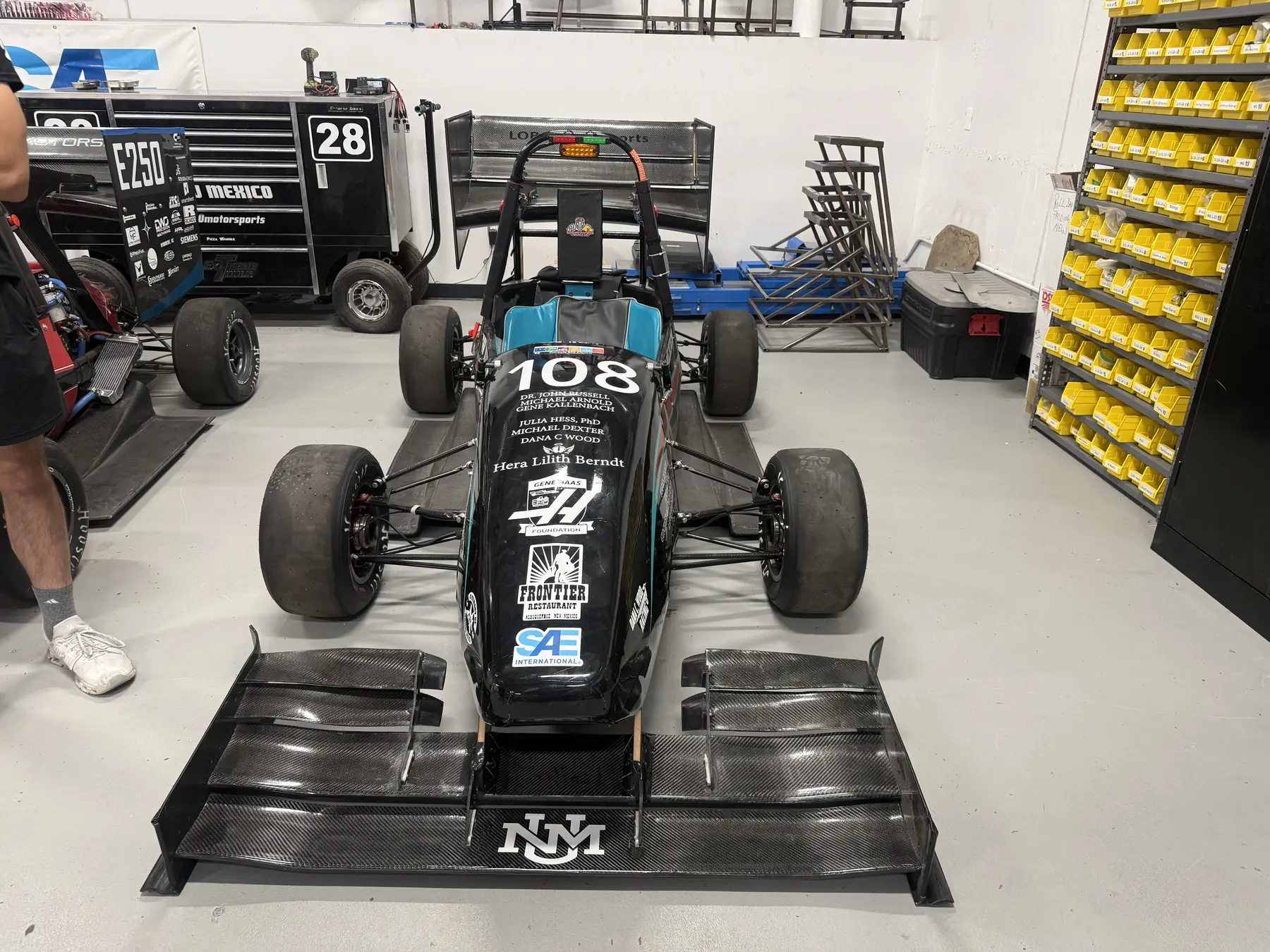
From requirements and first-principles estimates to STAR-CCM+ analysis, composite manufacturing, and track validation for UNM LOBO Motorsports.

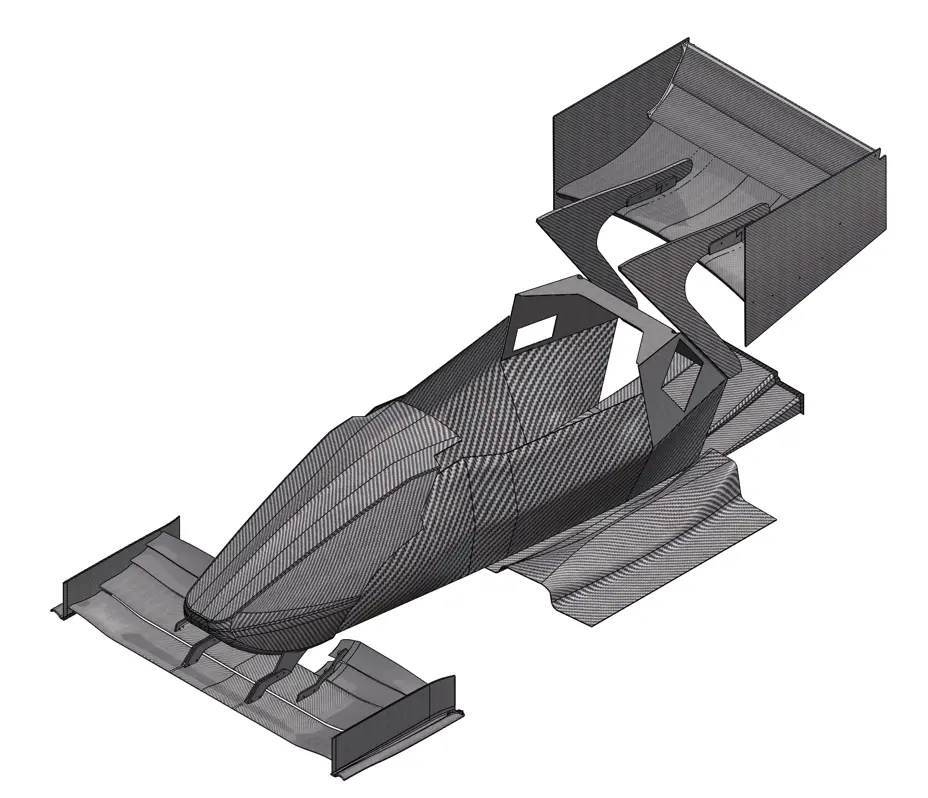
Isometric CAD view of the UNM Formula SAE aerodynamic package
FULL AERO PACKAGEFRONT + REAR WINGS · UNDERTRAY · BODYWORK

Team project · Aerodynamics subsystem

Turning airflow into usable lap-time performance.

The package was developed around one system-level objective: increase cornering grip without creating unmanageable drag or an unstable aerodynamic balance. Requirements were driven by lap simulation, prior-car data, driver feedback, and sensitivity studies for ride height, pitch, and yaw.

RequirementsLap simulationCFDComposite buildTrack test
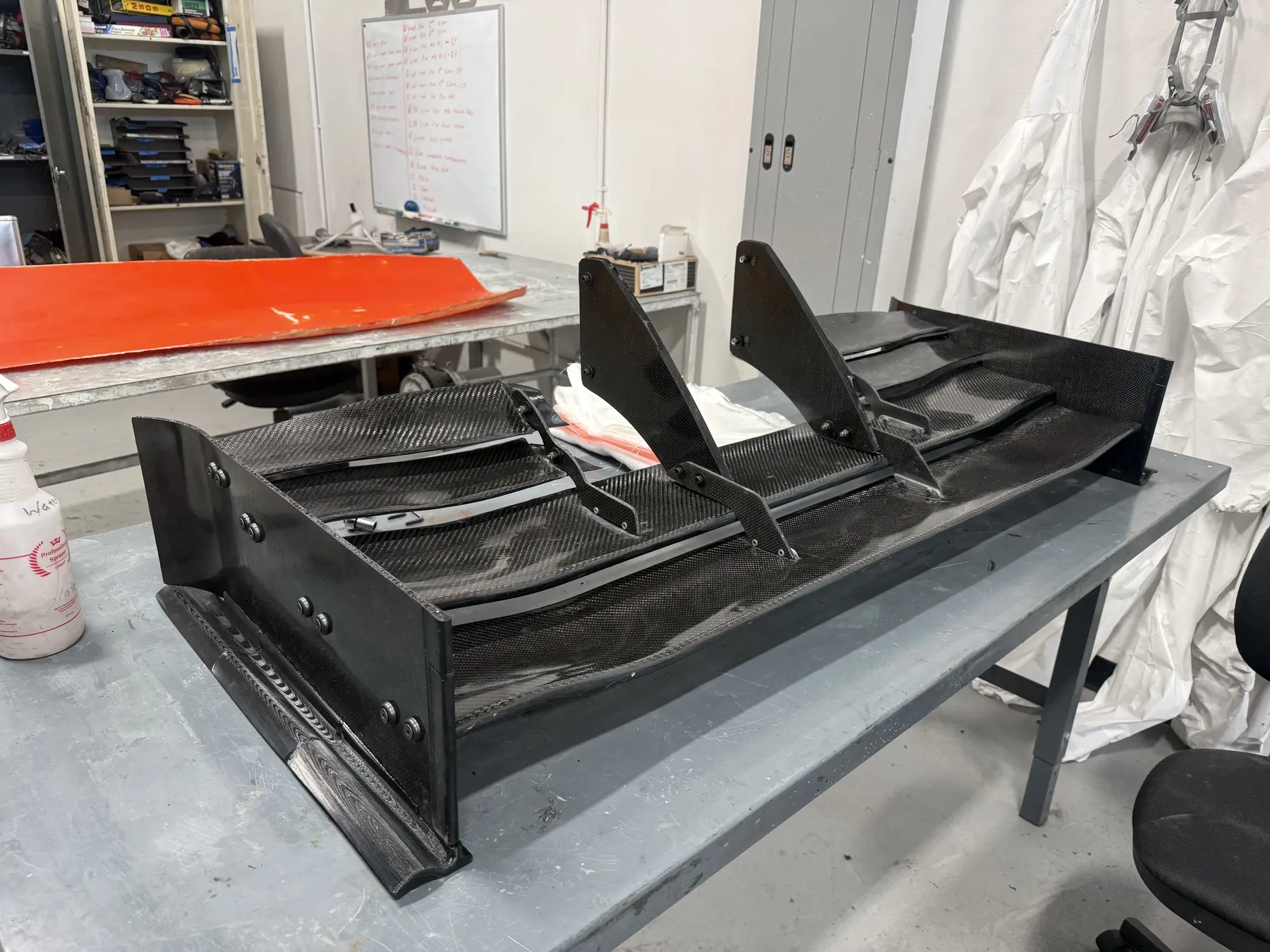
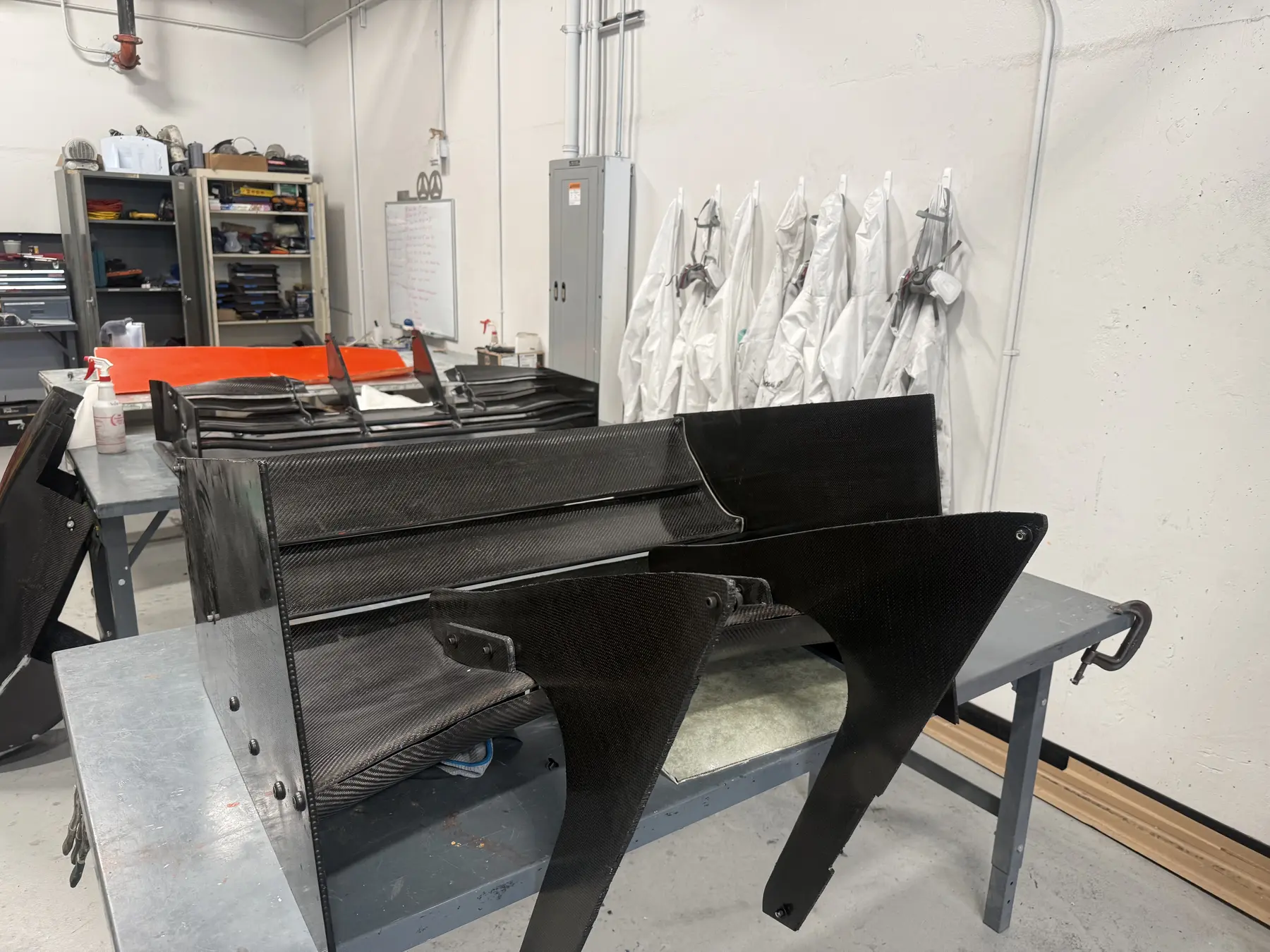
View the build gallery
−2.55Lift coefficientIntegrated package Cₗ
1.18Drag coefficientIntegrated package Cᴅ
181.16 lbfDownforce805.84 N at 80 km/h
83.46 lbfDrag371.25 N at 80 km/h
1.087 m²Frontal areaFull vehicle reference
~38 lbPackage weightTeam design target

Integrated full-vehicle STAR-CCM+ result documented in the team design binder. Forces reported at 80 km/h.

Theory → design decisions

The physics behind the package.

Dynamic pressure sets the available aerodynamic load. Geometry then determines how efficiently that energy becomes downforce, drag, and front-to-rear balance.

CFD extended those estimates by revealing pressure gradients, separation, wake interaction, and ground-effect behavior across the complete vehicle.

DYNAMIC PRESSUREq = ½ρV²

Aerodynamic loading grows with the square of speed.

DOWNFORCE + DRAGF = qCL,DA

Coefficients connect geometry and flow behavior to vehicle forces.

AERO BALANCEBfront = Ffront / Ftotal

Load distribution was tuned for stability, grip, and driver confidence.

GROUND EFFECTA₁V₁ = A₂V₂

Accelerated underbody flow lowers static pressure and generates load.

FW

Front wing

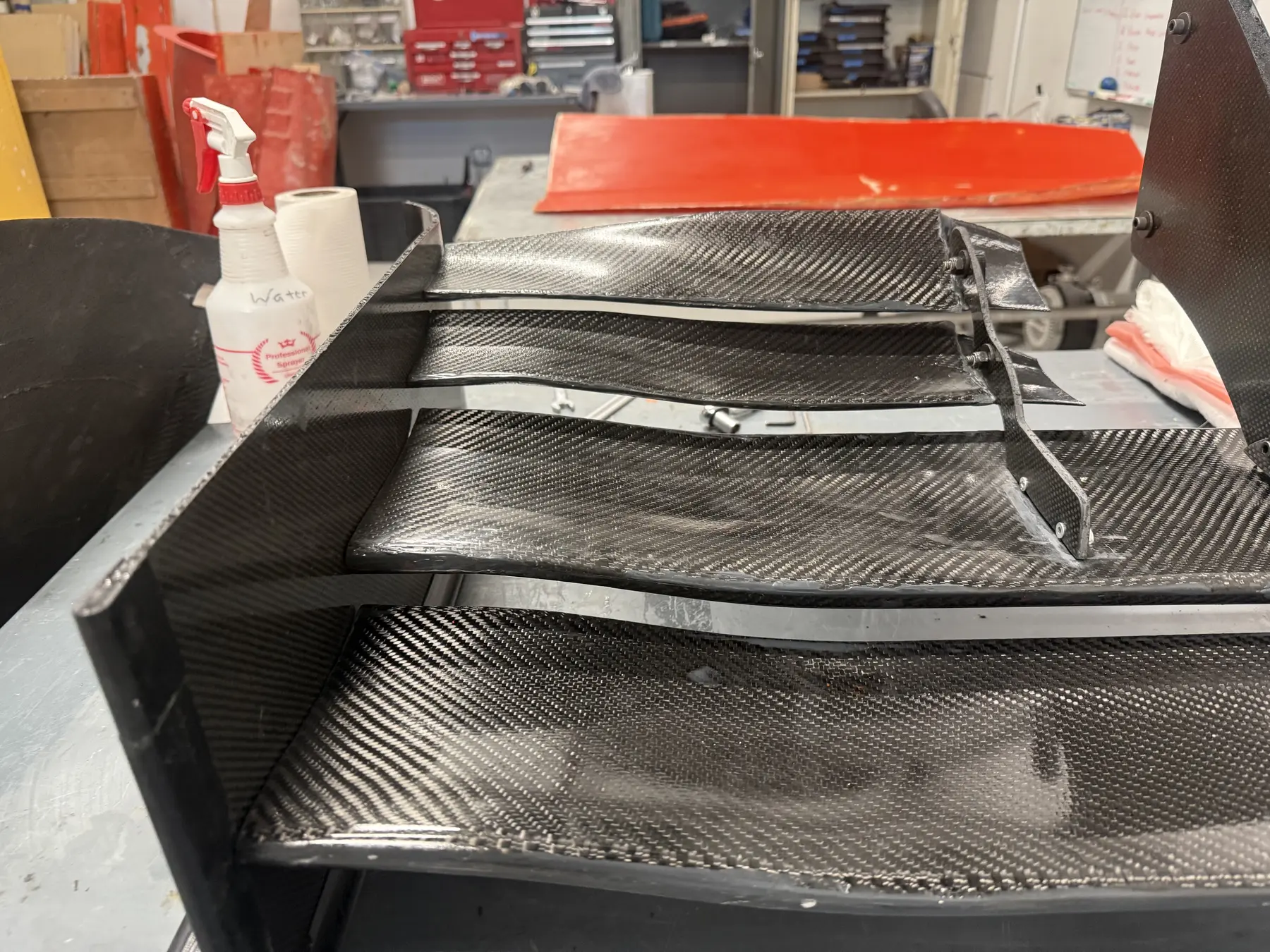
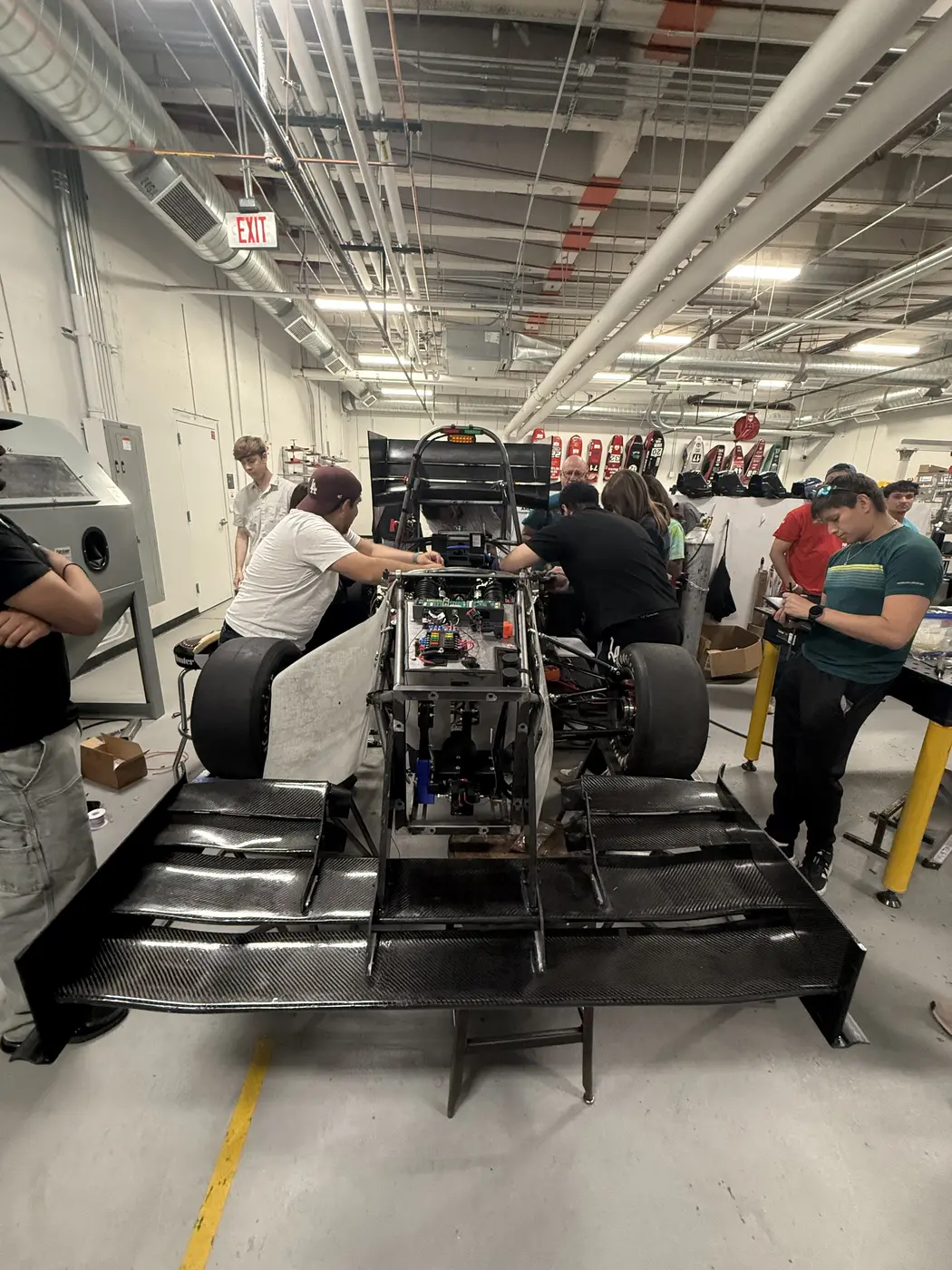
A multi-element wing tuned through angle-of-attack and element-spacing studies to create front load, maintain balance, and condition flow around the tires.

RW

Two-position rear wing

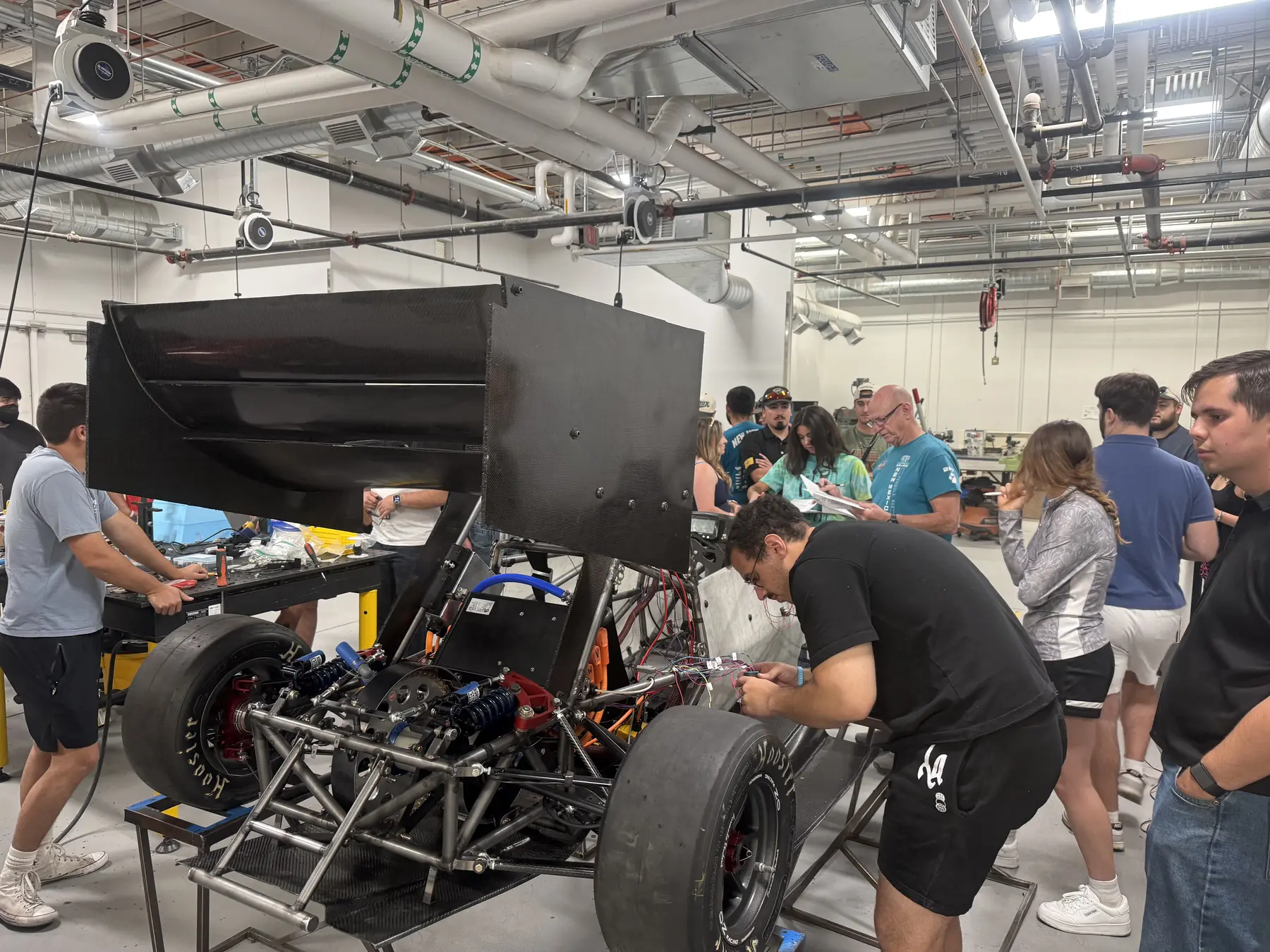
Closed and open configurations created a deliberate trade between high-downforce cornering performance and lower-drag straight-line operation.

UT

Undertray + diffuser

Ground-effect geometry accelerated underbody flow while ride-height and pitch studies shaped a design that remained usable across vehicle motion.

BW

Bodywork + integration

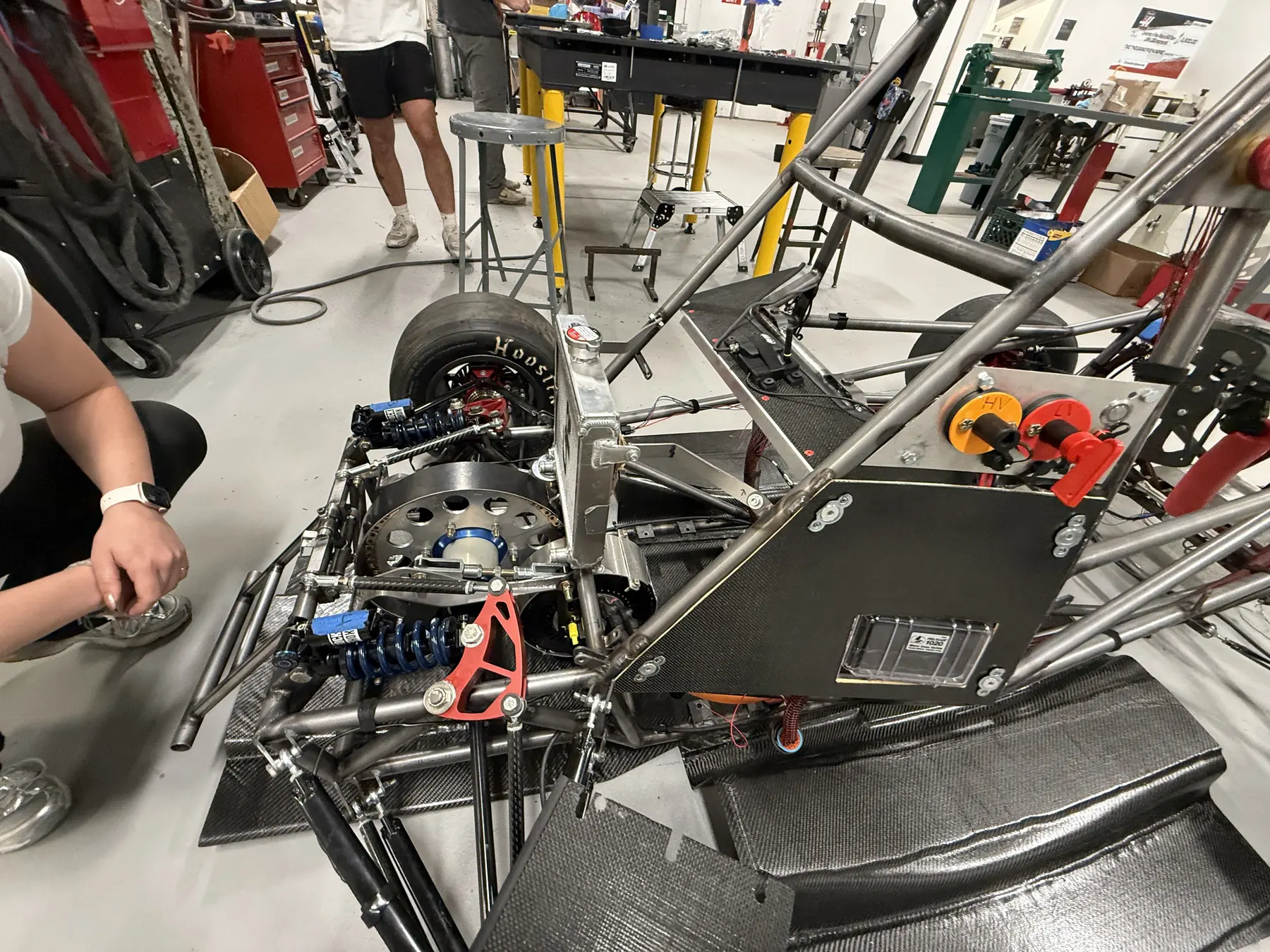
Nose and side-panel geometry reduced drag, protected downstream flow, preserved driver visibility, and packaged around suspension and electrical systems.

STAR-CCM+ / Design evidence

Comparing two rear-wing states.

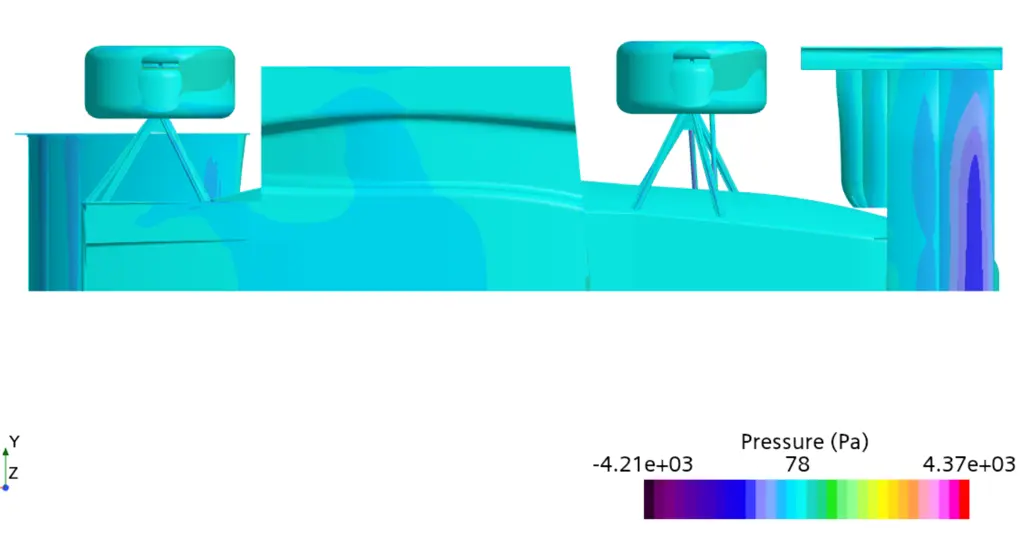
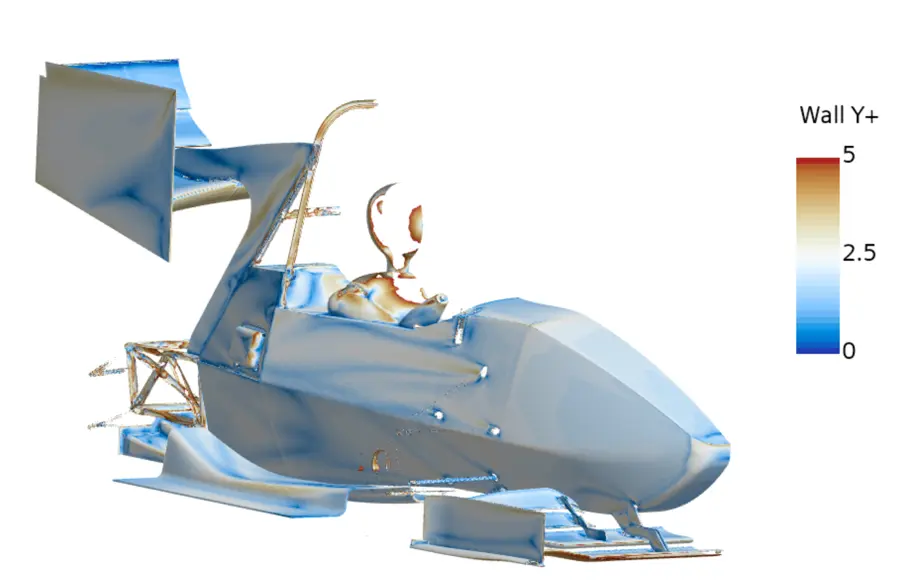
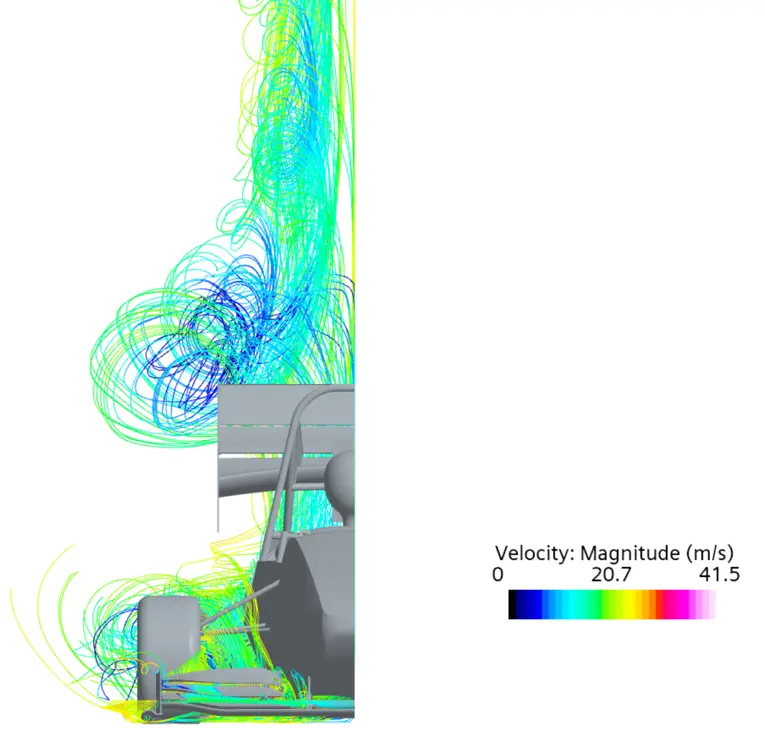
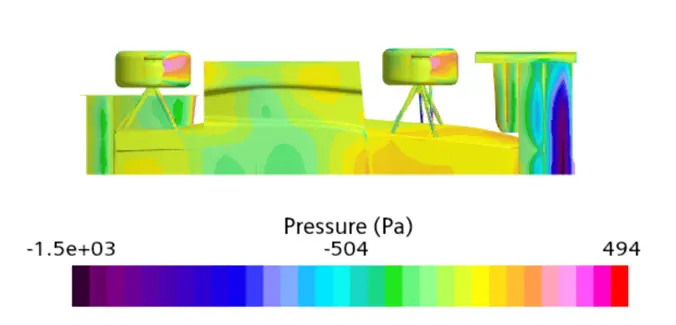
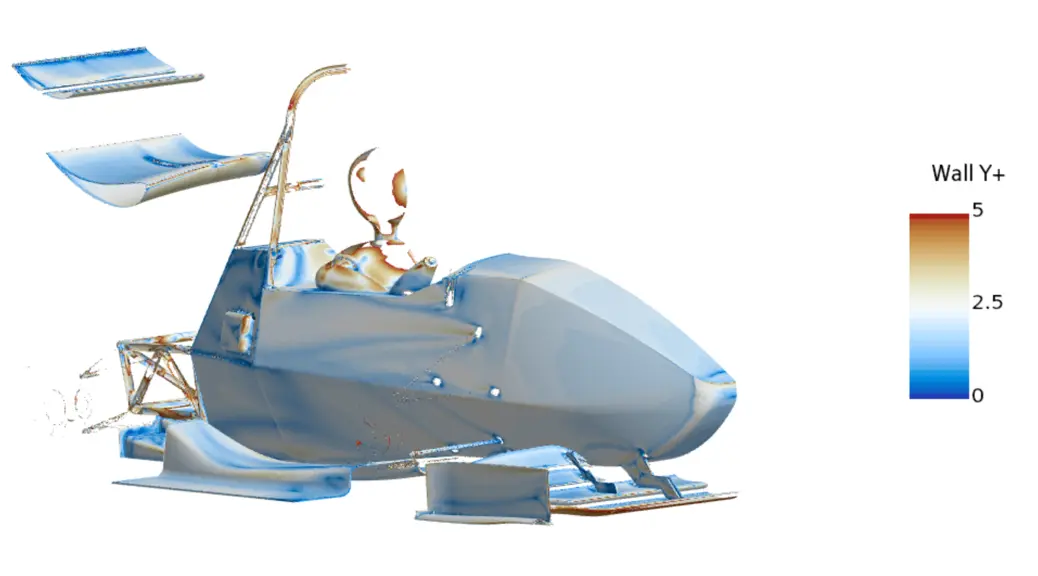
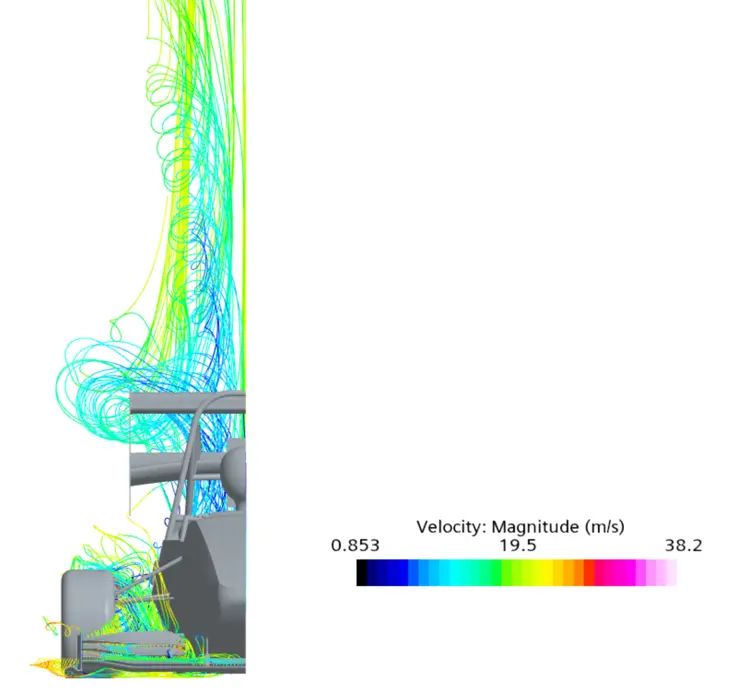
Velocity, pressure, surface-resolution, and streamline views were used together to understand the trade between maximum cornering load and reduced straight-line resistance.

01 / REAR WING CLOSED

High-downforce configuration

STAR-CCM+ vehicle-side velocity field with the rear wing closed
Velocity field · side plane
STAR-CCM+ pressure contour through the car with the rear wing closed
Static pressure · section plane
STAR-CCM+ wall y-plus surface check for the closed-wing configuration
Wall y+ · surface check
STAR-CCM+ rear-view streamlines for the closed-wing configuration
Velocity streamlines · rear view
02 / REAR WING OPEN

Lower-drag configuration

STAR-CCM+ vehicle-side velocity field with the rear wing open
Velocity field · side plane
STAR-CCM+ pressure contour through the car with the rear wing open
Static pressure · section plane
STAR-CCM+ wall y-plus surface check for the open-wing configuration
Wall y+ · surface check
STAR-CCM+ rear-view streamlines for the open-wing configuration
Velocity streamlines · rear view

Team-developed Formula SAE work shown for educational and portfolio purposes. CFD figures and performance values are highlights from the competition design binder; project photography documents manufacturing, integration, and the final vehicle.

03 / EXPERIENCE

Defense R&D, grounded in execution.

Experience across mechanical design, high-energy systems, materials research, and laboratory hardware.

01

Sandia National Laboratories

Mechanical Engineering R&D Intern · Accelerator Operations

Mechanical design, structural analysis, manufacturing definition, and rapid prototyping for Saturn, HERMES III, and SPHINX pulsed-power systems.

PTC CreoANSYSWindchillGD&T3D printing
02

Sandia National Laboratories

Mechanical Engineering R&D Intern · Metallurgy & Materials Joining

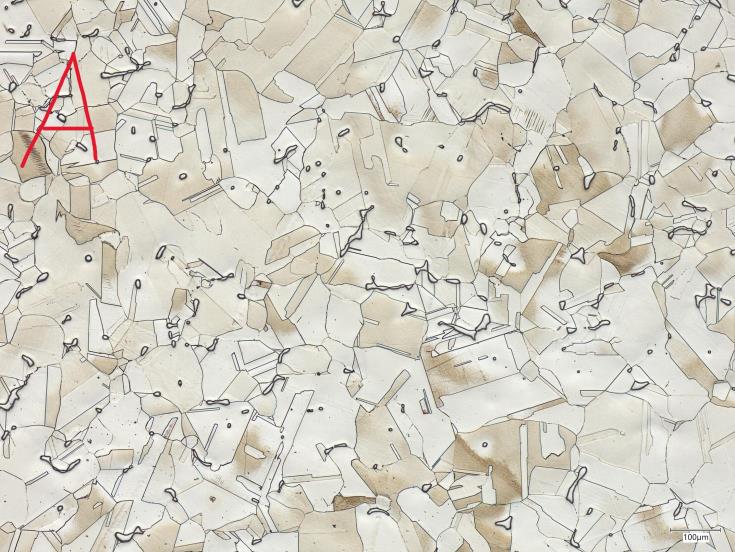
Hands-on failure analysis and materials characterization using sectioning, metallography, microscopy, chemical etching, and microhardness testing.

Failure analysisMetallographyMicroscopyR&D
03

Aperiodic Labs · University of New Mexico

Research Assistant

Built and operated high-voltage pulsed-power hardware, fabricated components, soldered circuit boards, and executed tests with oscilloscopes and vacuum equipment.

Pulsed powerHardware testMATLABSolidWorks

04 / CAPABILITIES

From first principles to finished parts.

I work across the full mechanical loop: define the problem, model the design, assess risk, build the hardware, and learn from test.

01

Mechanical design

PTC Creo, SolidWorks, production drawings, GD&T to ASME Y14.5, design release, and configuration control.

02

Analysis & validation

First-principles mechanics, ANSYS structural FEA, static strength, pressure and vacuum loading, factor of safety, and eigenvalue buckling.

03

Build & test

Additive manufacturing, rapid prototypes, machining coordination, composite layup, soldering, oscilloscopes, and laboratory test equipment.

04

Systems thinking

Electromechanical integration, pulsed-power hardware, vacuum systems, Windchill PLM, MATLAB, and high-performance computing.

Education

University of New Mexico

Bachelor of Science in Mechanical Engineering

DECEMBER 2026GPA 3.2

Publication & recognition

Electrolytic Etch Uniformity of 304L Stainless Steel

First Author · 34th Rio Grande Symposium on Advanced Materials

20242ND PLACE UNDERGRADUATE POSTER
View research poster

Available for full-time roles in 2027

Let's build hardware
that matters.

I'm interested in mechanical engineering roles across defense technology, aerospace, and advanced hardware teams where speed, rigor, and ownership matter.